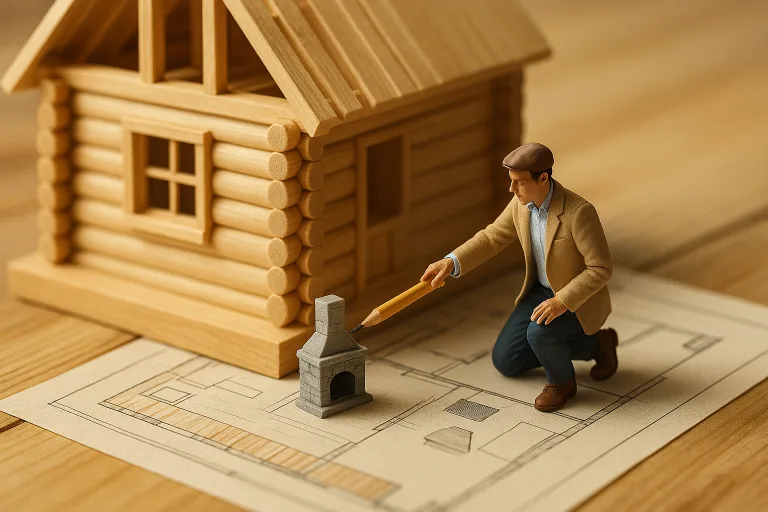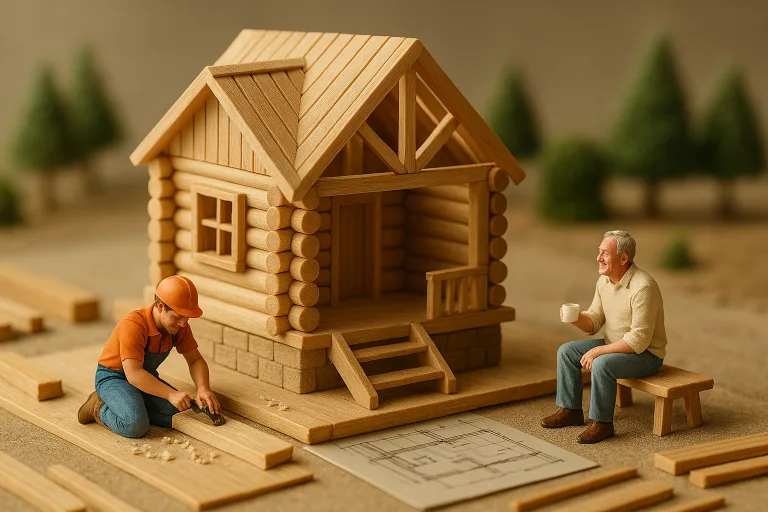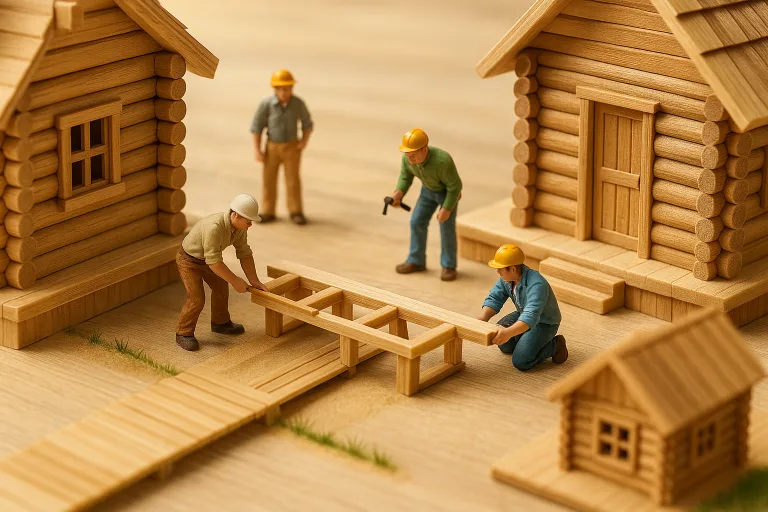
Wooden Country Houses in the Moscow Region: Rounded Logs and Profileed Timber
Building a wooden country house from rounded logs or profiled timber is a popular choice around Moscow. Wood creates a warm, healthy interior, fits the rustic landscape, and—when designed and built correctly—performs very well in the Moscow climate. This guide covers the practical and design aspects you need to know when choosing cedar, larch or pine and planning construction in the Moscow region.
1. Moscow-region context: climate and site considerations
— Long, cold winters and freeze–thaw cycles; temperature extremes and snow loads matter for roof and foundation design.
— Seasonal ground water and frost heave require proper foundation choice and drainage.
— Forested, suburban or open-field sites present different wind and sun exposures—orientation matters for passive solar gain and snow drifting.
2. Rounded logs vs profiled timber — which to choose?
— Rounded logs (hand-hewn or milled):
— Traditional, rustic look with deep texture and strong character.
— Natural shrinkage and settling are more pronounced; requires special attention to joinery and adjustable elements (windows/doors).
— Good thermal inertia but needs precise detailing at corners and openings.
— Profiled timber (planed, profiled, or glued/layered timber like profiled or glued laminated timber — glulam):
— Cleaner, modern lines; easier to assemble and seal due to matching profiles.
— Smaller and more predictable shrinkage if kiln-dried or laminated.
— Faster construction, tight fits, often better airtightness and lower finishing effort.
— Choice depends on aesthetic preference, budget, and tolerance for settling/maintenance.
3. Wood species — cedar, larch, pine: strengths and trade-offs
— Cedar:
— Excellent natural rot and insect resistance, pleasant aroma, low shrinkage.
— Lightweight, thermally comfortable, but usually more expensive.
— Great for interiors, façades, and places with high moisture like saunas.
— Larch:
— Very durable and dense; naturally weather-resistant; good for external cladding and structural use.
— Heavier and harder; ages to an attractive silvery tone if left unfinished.
— Excellent long-term outdoor performance in the Moscow climate.
— Pine:
— Economical, widely available, easy to work with.
— Requires preservative treatment and regular maintenance to prevent decay and insect attack.
— Good structural properties when properly dried and profiled.
4. Foundation and structural considerations for the Moscow winter
— Prefer foundations that cope with frost heave and seasonal groundwater:
— Screw-pile foundations: fast, cost-effective, good for uneven ground; common for lighter timber buildings.
— Strip foundations (reinforced concrete): traditional choice for heavier log houses and multi-storey projects.
— Block or pile-grillage foundations for difficult soils.
— Ensure good drainage (perimeter drains, correct grading) and frost insulation at the foundation edges.
— Account for vertical settling:
— Log houses can settle significantly in the first year; design for adjustable window/door frames and roof-to-wall connections.
— Profiled and laminated timber settle less—verify manufacturer specs.
5. Thermal performance and insulation
— Solid wood has good thermal capacity, but additional insulation may be needed for modern energy standards:
— Use airtight but vapor-permeable layer systems.
— For log houses, minimize air leaks with quality gaskets, hemp/chinking, or modern sealant systems.
— For profile/glulam houses, complementary insulation is easier to add in framed or ventilated facades.
— Consider triple-glazed windows, thermal floor slabs, and insulated roof assemblies to meet energy comfort in the Moscow climate.
6. Moisture control and ventilation
— Proper roof overhangs, gutters, and airtight external connections are essential to keep wood dry.
— Install controlled mechanical ventilation with heat recovery (HRV) to maintain indoor air quality and reduce heat loss—especially important for highly insulated homes.
— In bathrooms and saunas use extract ventilation and moisture-resistant finishes.
7. Construction sequence and timeline (typical)
— Site preparation and foundation: 2–6 weeks depending on type and weather.
— Wall assembly (rounded logs or profiled timber): from 1–6 weeks for a small to medium house (depending on prefabrication).
— Roof, windows, and rough envelope: 2–8 weeks.
— Interior and finishing: 1–4 months depending on complexity.
Total turnkey time can vary from 3 months for smaller prefabricated projects to 9–12 months for bespoke builds.
8. Design ideas and finishes
— Exterior:
— Natural finish (oil, transparent stain) to preserve wood grain, or pigmented stains for UV protection.
— Combine timber with stone or brick plinths to protect lower walls from splash and snow.
— Deep eaves and covered porches extend life and create comfortable outdoor spaces.
— Interior:
— Exposed logs or timber walls for living rooms with underfloor heating for comfort.
— Light-colored finishes (whitewashed larch/pine) for a Scandinavian look; cedar for warm, aromatic interiors.
— Integrate a traditional banya/sauna — use larch or cedar for wet zones.
— Modern options:
— Hybrid: timber exterior with SIPs or framed insulated walls for enhanced energy performance.
— Large glulam beams and vaulted ceilings for contemporary rustic spaces.
9. Maintenance and protection
— Regular inspections and re-treatment of external coatings every 3–7 years depending on product and exposure.
— Re-seal joints and check gaskets after the first year of settling and then periodically.
— Treat cuts and end-grains with appropriate preservatives and UV-protective coatings.
— Protect from insects and fungi by choosing adequately dried wood and appropriate preservatives—especially for pine.
10. Fire protection and safety
— Use intumescent coatings where local codes or insurance require fire protection.
— Install smoke detectors, multi-point ventilation shut-offs, and consider placement of heating systems to minimize fire risk.
— Non-combustible foundation plinths and stone chimneys reduce risk.
11. Permits, standards and contractor selection
— Check local